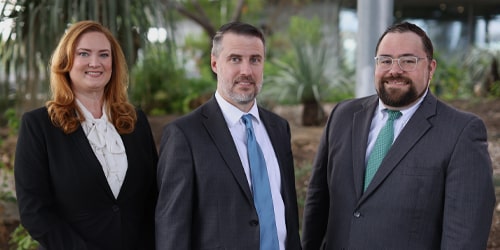
At Lype, Dest & Smith, we leverage over 30 years of dedicated experience to protect the licenses, reputations, and futures of healthcare professionals across Texas.
When your nursing license is at stake, every decision matters. Our nursing license defense attorneys in Arlington represent nurses across the region facing allegations, investigations, or disciplinary action from the Texas Board of Nursing.
Being accused of misconduct can threaten everything you have worked so hard to achieve. At Lype, Dest & Smith Lawyers, we guide you through every step of the process and fight to protect your professional future.
Arlington is home to a growing healthcare network, from hospitals like Texas Health Arlington Memorial to long-term care facilities and home health agencies. With that growth comes increased scrutiny from employers, state boards, and federal regulators. Even a single patient complaint or minor documentation error can spiral into a full-scale investigation.
In Texas, licensed vocational nurses (LVNs) and registered nurses (RNs) are governed by the Texas Board of Nursing (BON), which enforces strict standards of care and professional conduct. When a complaint is filed, the BON can launch an investigation that may lead to disciplinary actions ranging from warnings to full license revocation. Once the process begins, the outcome often hinges on how promptly and strategically you respond.
A license defense lawyer understands how to challenge weak allegations, mitigate risks, and negotiate better outcomes. Without one, you’re often at a disadvantage against a board armed with investigators, staff attorneys, and established procedures designed to protect the public, not your license.
Investigations by the Texas BON can stem from many sources. According to the National Council of State Boards of Nursing (NCSBN), the BON is required to evaluate every complaint it receives to determine if there has been a potential violation of the Texas Nursing Practice Act.
Complaints may be submitted by patients, family members, employers, coworkers, supervisors, and other sources.
Once submitted, each complaint is assessed to determine whether it falls within the BON’s jurisdiction. If so, a formal investigation is initiated, even if the allegation appears minor on the surface.
One of the most common triggers for BON investigations involves suspected medication errors or allegations of drug diversion. This can include discrepancies in narcotics logs, patterns of missing medication, or irregularities in documentation related to drug administration.
In many cases, even an honest mistake—such as miscounting doses during shift changes or unintentionally missing a medication scan—can raise concerns. If the nurse appears impaired or there are behavioral red flags (such as frequent bathroom breaks, mood swings, or drowsiness on shift), colleagues may report these observations as possible substance misuse.
The BON treats all such complaints seriously, often launching investigations and subpoenaing records even before the nurse has had an opportunity to explain what happened.
Social media misuse is increasingly landing nurses in regulatory trouble. A well-intentioned but poorly considered post, photo, or comment can potentially violate HIPAA or be viewed as unprofessional behavior.
Examples include posting selfies in scrubs at the nurse’s station, sharing patient stories or outcomes (even without identifying information), or commenting on sensitive patient matters in nursing groups.
Employers and coworkers routinely monitor public posts, and one screenshot can be enough to prompt an investigation. The Board may view such conduct as a lapse in professional judgment or breach of confidentiality, regardless of the nurse’s intent.
The Texas BON has broad authority to investigate nurses for behaviors that reflect poorly on their ability to practice safely, even if those behaviors happen off the job. This includes issues like bullying coworkers, being chronically late or absent without notice, or behaving disrespectfully or in a hostile manner toward patients.
Off-duty conduct such as harassment, social media disputes, or public intoxication can also result in scrutiny. The Board considers whether the behavior indicates a lack of professional integrity, poor judgment, or risk to patient safety.
Documentation is a critical component of safe nursing practice. Nurses who chart inconsistently, skip notes, or backdate entries can find themselves under investigation. Even in fast-paced environments like the ER or ICU, failure to completely and accurately document assessments, interventions, and communications with physicians may result in allegations of negligence or falsification.
BON investigators often treat poor documentation as evidence that a nurse didn’t perform their duties, or is trying to conceal mistakes. Routine chart audits or incident reviews can uncover these lapses and trigger complaints.
Nurses are held to strict standards when it comes to maintaining professional boundaries. Even benign conduct, like accepting a generous gift, exchanging personal phone numbers, or caring for a former romantic partner, can raise red flags.
More serious violations include forming emotional, romantic, or sexual relationships with patients or their family members. The BON takes these allegations seriously, often viewing them as exploitation or abuse of the nurse-patient relationship.
Nurses who are unclear on what constitutes a boundary crossing may unintentionally invite scrutiny through overly familiar or emotionally invested interactions.
A nurse’s legal trouble can quickly become a professional issue. The BON automatically reviews any criminal conviction or arrest that appears in background checks, license renewals, or is reported by an employer. While not all charges result in discipline, the Board examines whether the underlying behavior reflects negatively on the nurse’s fitness to practice.
DUIs, theft, domestic violence, and drug-related offenses are among the most common charges that trigger investigations. Even if the incident occurred years ago or was dismissed, it can still lead to questions about character and decision-making.
As outlined by the National Council of State Boards of Nursing (NCSBN), what begins as a single incident, no matter how minor, can quickly escalate into a complex investigation with long-term consequences. Understanding these common triggers is the first step in protecting your license and future.

Many nurses believe that being honest and cooperative will help clear their name. They might think, “If I just explain what happened, they’ll understand.”
However, the Texas Board of Nursing (BON) is not your advocate. Its role is to protect the public, not to defend your career. So, when nurses face investigations without legal help, they often unintentionally hurt their case.
In an attempt to be transparent and cooperative, many nurses sign documents or give verbal explanations without fully understanding the implications. These actions—like submitting a response letter without legal review or casually speaking with a Board investigator—can carry legal consequences.
The BON is not obligated to explain your rights or protect your interests. By the time some nurses realize they’ve unknowingly admitted to fault or accepted terms that restrict their license, it’s often too late to undo the damage. That’s why it’s crucial to fully understand every communication and action you take during an investigation.
It’s natural to want to explain yourself when facing an accusation, but even well-meaning statements can be misinterpreted when speaking to a BON investigator. Something as simple as acknowledging a stressful day or admitting to being behind on charting can be twisted into an admission of guilt.
Board investigators are trained to identify inconsistencies or details that support their case, not yours. A single careless statement can shift the entire outcome of your case, especially if made without understanding how it might be perceived in a formal proceeding.
Texas BON investigations have strict deadlines, and failing to meet just one can jeopardize your case. Whether it’s submitting a written response, requesting a hearing, or appearing at a settlement conference, the process is rigid and unforgiving.
Many nurses miss deadlines because they are overwhelmed, confused, or unaware of what the Board expects. Unfortunately, procedural failures can result in default judgments or additional penalties, regardless of the strength of your defense.
Staying ahead of every required step is essential to preserving your options and avoiding permanent damage to your license.
Some nurses accept Agreed Orders that significantly restrict their practice without fully understanding the long-term consequences. These agreements may include license restrictions, public reprimands, mandatory drug testing, fines, and/or remedial coursework.
While these options may seem preferable to license suspension or revocation, they often have hidden consequences: they’re reported to national databases and usually must be disclosed to employers.
They may prevent also nurses from working in specific settings. Worse, once an Agreed Order is signed, it’s nearly impossible to undo. Nurses should never accept disciplinary terms without fully understanding what they agree to and how it will affect their future.
Nurses across Arlington are held to high standards; even an unintentional mistake can be interpreted as a violation. As outlined by NurseJournal, here are some of the most common allegations a nurse faces:
These are some of the most common violations investigated by the BON. Drug diversion often involves allegations that a nurse has taken or misused controlled substances intended for patient care. Even a single discrepancy in medication logs or waste documentation can raise suspicions.
HIPAA violations occur when protected patient information is shared without authorization through text messages, social media, or casual conversations. In today’s digital landscape, nurses must also be cautious about what they post online.
Seemingly harmless photos or stories that indirectly identify patients can result in serious consequences.
The Texas BON evaluates a nurse’s fitness to practice holistically, which includes personal conduct off the clock. Even if an arrest for DUI, assault, or theft doesn’t happen at work, it can trigger a formal investigation. The Board may consider whether the incident reflects your integrity, judgment, or ability to care for patients safely.
Crossing professional boundaries can involve romantic, financial, or overly personal relationships with patients. One of the most serious violations in this category is engaging in a sexual relationship with a patient. Other examples include accepting expensive gifts, exchanging personal contact information, or confiding in patients about your private life. These actions may blur the professional line and can quickly escalate into formal allegations.
Substance misuse is one of the leading causes of discipline among nurses. This includes using drugs or alcohol on the job, reporting to work under the influence, or diverting medications for personal use. According to the 2020 CNA and NSO Nurse Professional Liability Exposure Claim Report, substance misuse accounted for more than 42% of professional conduct allegations. Even off-duty behavior can be scrutinized if it raises safety concerns.
Any act that could be interpreted as physical, emotional, or verbal abuse toward a patient may lead to swift action by the Board. Allegations may involve shouting at patients, improper restraint use, neglecting patient needs, or creating an unsafe care environment. These claims are taken very seriously, and even if untrue, they can be difficult to disprove without documentation or witness support.
Fraud allegations often involve falsifying documentation, billing for services not rendered, or misrepresenting credentials on job applications. Even minor lapses in truthfulness can carry significant consequences when discovered by the Board. Intentional dishonesty is considered a breach of trust, often leading to serious penalties.
Accurate, timely documentation is a cornerstone of nursing practice. Omissions, backdating, or inconsistent entries can potentially harm patients and become evidence in a disciplinary case. According to the CNA/NSO report, nearly 10% of professional liability claims involve documentation failures.
Each nursing role has clear boundaries on what procedures, medications, and tasks are allowed. Administering medication without a proper order, performing advanced assessments, or failing to consult a supervisor when needed can all lead to accusations of working outside one’s scope—an issue present in nearly 25% of BON disciplinary cases.
Failure to adhere to established nursing protocols and standards may lead to allegations that you’re placing patients at risk. This includes poor clinical judgment, failure to escalate care when needed, or not following facility policies. More than half of scope-of-practice violations stem from failure to meet accepted standards.
Knowing where the lines are drawn, especially regarding boundaries, scope of practice, and documentation, can help prevent misunderstandings from becoming career-altering investigations. When in doubt, ask a supervisor or refer to the Texas Nursing Practice Act for guidance.
The BON disciplinary process can feel overwhelming, especially when your career hangs in the balance. But understanding what to expect can help you make informed, strategic decisions that protect your license and livelihood.
Anyone who believes a nurse has violated the Texas Nursing Practice Act can file a complaint. This includes patients, family members, co-workers, employers, and other sources. Healthcare professionals are also mandated reporters, which means they are legally required to report certain types of misconduct. Failing to report can trigger disciplinary action against their licenses.
Complaints may also stem from a nurse self-reporting an incident or automatically triggered by a criminal conviction. For example, a DUI or assault arrest, even if it occurs off-duty, can result in an automatic review by the Board.
Before launching a full investigation, the BON conducts an initial review to determine if the complaint falls within its authority. The key question at this stage is whether the alleged conduct, if true, would violate the Nursing Practice Act and/or Board rules. This step doesn’t determine guilt—it simply ensures the Board has jurisdiction and that the complaint meets the threshold for further examination.
Once jurisdiction is confirmed, the BON opens a formal investigation. This process can take several months and varies depending on the complexity of the allegations. During this time, the Board may:
The goal is to gather enough evidence to determine whether a violation likely occurred. How you respond during this phase can dramatically influence the outcome.
After reviewing all evidence, the BON may choose to close the case or move forward. The next step could be one of several paths:
An ISC is often a pivotal moment. It allows nurses, especially those with experienced legal counsel, to counter weak allegations and reach more favorable resolutions.
If the BON determines that a violation occurred, it will impose disciplinary action based on the severity of the conduct and any prior history. Possible outcomes include:
All disciplinary actions must be reported to both Nursys, the national nurse license database, and the National Practitioner Data Bank (NPDB). These systems are used by state boards, healthcare employers, insurers, and credentialing entities nationwide.
This means that even minor sanctions can follow a nurse from one job or state to the next. They may impact your ability to:
Understanding this entire process helps nurses see what’s at stake. It’s not just about defending against one complaint—it’s about preserving your reputation, career mobility, and financial future.
As a nurse under investigation, you have important legal rights designed to protect you, but only if you know how and when to assert them. At Lype, Dest & Smith Lawyers, our nursing license defense attorneys in Arlington are committed to ensuring every nurse we represent understands these rights and how to use them effectively.
You have the right to hire an attorney at any point in the BON investigative process. This means you can bring in legal support from the moment you receive a complaint letter to help you understand the charges, build a defense, and protect your license. Many nurses wait until things escalate before calling an attorney, but early legal guidance can often prevent that escalation in the first place. At our firm, we step in early to interpret allegations, respond strategically, and position your case for the best possible outcome.
The BON must provide you with access to the evidence it has collected in your case. This includes any documentation, statements, or investigative reports used to support the allegations. This right ensures transparency and allows you to craft a well-informed response. Our legal team carefully examines this evidence for inconsistencies, gaps, or due process violations. We use that information to challenge weak claims and defend your actions professionally and truthfully.
If you disagree with the Board’s proposed resolution, you are entitled to request a formal hearing before the State Office of Administrative Hearings (SOAH). This is your opportunity to present witnesses, introduce documents, and tell your side of the story before an impartial administrative law judge. These hearings can determine whether you retain your license and often serve as a final opportunity to avoid disciplinary action. Lype, Dest & Smith has represented nurses in SOAH hearings across Texas and can help you prepare a compelling, organized case.
You are not required to submit a written statement or speak with Board investigators without legal counsel. Many nurses feel pressured to explain themselves quickly, but without proper guidance, this can lead to unintentional self-incrimination. The BON can use your words against you, even if you meant no harm. Our firm ensures your voice is heard—but only when it benefits your case.
These rights aren’t just formalities—they are powerful tools that, when properly exercised, can protect your career, reputation, and future in nursing. Too often, nurses overlook or delay asserting these rights until after damage is done. Let Lype, Dest & Smith Lawyers guide you through the process and ensure your defense is built on solid legal footing from day one.
One of the most powerful decisions a nurse can make during a Board investigation is to get legal help early. According to the National Council of State Boards of Nursing (NCSBN), a large number of complaints are resolved without disciplinary action, particularly when the nurse takes timely, informed steps from the beginning. However, too many nurses wait until the situation becomes urgent or irreversible before reaching out.
At Lype, Dest & Smith Lawyers, our nursing license defense attorneys in Arlington know firsthand how early legal intervention can shift the outcome. When we’re brought in at the initial stages, we can:
We’ve seen it repeatedly: when nurses call us early, they gain more options and better control of the process. In many cases, early legal support has helped close investigations before they escalated, saving our clients not just their licenses but also their peace of mind, financial stability, and careers.
When your nursing license is on the line, you need more than general legal advice; you need nursing license defense attorneys in Arlington who understand every nuance of the regulatory system. At Lype, Dest & Smith, we don’t dabble in this area. It’s what we do every single day. Our firm was built around defending nurses, doctors, pharmacists, and other healthcare professionals across Texas facing investigations, disciplinary actions, and career-altering complaints.
What sets us apart from other firms:
You can view examples of our work by browsing our recent case results. We’ve defended nurses in matters involving substance use, HIPAA violations, social media complaints, impaired practice, and allegations of abuse. In every case, we bring sharp legal strategy, deep knowledge of BON rules, and a clear commitment to protecting your future.
At Lype, Dest & Smith, we treat every case with urgency, professionalism, and compassion—because we know what’s at stake. That’s why nurses across Arlington choose us when their license is threatened.
When you meet with our team, we:
You’ll leave the consultation with clarity, not confusion.
We recommend reaching out as soon as you receive any communication from the Board. Delaying action can narrow your options and increase the likelihood of disciplinary consequences.
Are you facing an investigation or disciplinary action from the Texas Board of Nursing? We are here to help. Our nursing license defense attorneys in Arlington are ready to stand beside you and protect your livelihood. Reach out today to schedule your confidential consultation. Contact Lype, Dest & Smith at 512-881-3556 to take the first step in defending your career.

Not afraid to go to court when necessary, Dan has successfully litigated cases all the way to the Supreme Court of Texas. Dan also prides himself on being readily available to clients throughout their cases. He strongly believes effective representation should be a collaborative effort between a client and their attorney.
Years of experience: 15 years
Justia Profile: Dan Lype
Bar number: 24065658
Location: Austin, TX
If you or a loved one needs legal help, please fill out the form below for your consultation or call us at 512-881-3556

“ Wonderful Administrative Lawyer. Mr. Lype represented me at a hearing before the Texas Board of Law Examiners. After substantial preparation, I was well prepared for the hearing. Dan has relationships with the staff members and was able to help me understand exactly what to expect. With Dan’s assistance I was ab...”
“ Great Attorneys in Texas. This attorney is very diligent ,calm ,professional who will listen to you and very aggressive in his pursuit for justice for his clients.His main goal is exoneration for which he effortfully seeks.Plea deal would be his lost resort. Recently successfully represented me before the Texas Me...”
“ Worth every penny. Mr Lype is a bulldog when it comes to defending his client. He is diligent, agreesive and great listener. He provides timely updates on your case. Mr Lype is very verse in the healthcare laws of Texas and is worth having on your team. I would use him every time. ”
“ Highly recommend. I had pretty serious allegations resulting in an investigation. Dan helped guide me perfectly And gave me reassurance that I really needed.. He knew exactly how much information to provide at each step along the way. During my hearing, he pleaded my case very effectively. Due to his expertise, my...”
If you or a loved one needs legal help, please fill out the form below for your consultation or call us at 512-881-3556